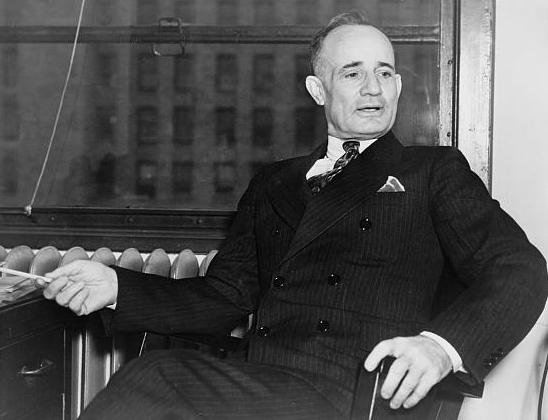
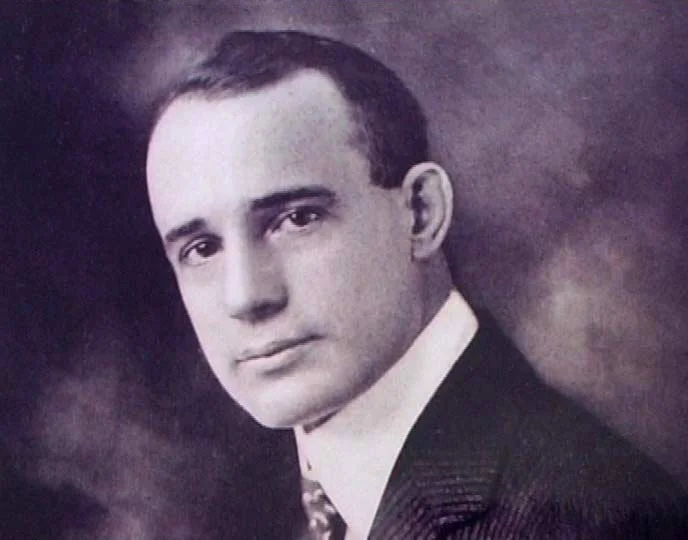
Napoleon Hill was an American author and lecturer, best known for his 1937 book Think and Grow Rich, one of the best-selling self-help books in history, with sales estimated between 25 and over 100 million copies depending on the source.
By his own account, industrialist Andrew Carnegie challenged a 25-year-old Hill in 1908 to spend 20 years unpaid, interviewing over 500 successful people to distill a universal formula for achievement — a story that became the foundation of Hill's entire public identity, even though historians have never been able to independently confirm the meeting took place.
In this post, we're going over Napoleon Hill's List to see how his life fits into the Home, Work, and Self framework.
“Everything works out for me because that is who I am.”
Sources
Home
House
Real Estate - Hill moved frequently throughout his life, including stretches in Chicago, Philadelphia, West Virginia, and eventually California with his final wife.
Design - No public information.
Maintain - No public information.
Partner
Quality Time - Hill married five times: an unnamed first marriage in 1899 that was annulled, Edith Whitman (1903–1908), Florence Elizabeth Horner (1910–1935), Rosa Lee Beeland (1937–1940), and Annie Lou Norman, who remained married to him from 1943 until his death in 1970.
Shared Responsibilities - His third wife, Rosa Lee Beeland, is credited by biographers and even the book's own publication history as having substantially contributed to the writing and editing of Think and Grow Rich — she's listed as a co-author on some editions.
Conversation - According to biographer accounts, Hill's marriage to Florence ended after 25 years, and the transition into his relationship with Rosa Lee was documented as difficult for the rest of the family, with real strain reported between Hill and his adult son during that period.
Family
Parents - Hill was born Oliver Napoleon Hill in 1883 in a one-room cabin in Wise County, Virginia. His mother died when he was nine or ten; his father remarried two years later to a woman named Martha, who — according to Hill's own retelling — traded him a typewriter for the pistol he carried as a rebellious boy and encouraged him toward writing.
Siblings - No public information.
Kids — Hill had four children. His daughter, Edith, was born during his first marriage. With his second wife, Florence, he had three sons: James, Napoleon Blair, and David. Blair was born without external ears and with profound hearing impairment. Hill rejected the medical prognosis for his son refused to allow Blair to learn sign language, believing instead that he would eventually hear and speak. Blair later gained useful hearing through an electrical hearing device and became involved in work related to hearing aids and helping people with hearing loss. Later biographical accounts also describe a deeply troubled relationship between Hill and Blair. They report that Hill's behavior toward Blair's wife, Vera, contributed to the breakdown of their marriage, and that Blair subsequently provided Hill and Rosa Lee Beeland with a $300 loan while they were working on Think and Grow Rich.
Work
Make
Time - By his own account, Hill spent two decades — starting in 1908 — interviewing successful figures of the era to develop his philosophy of achievement, though historians note his claimed access to figures like Carnegie, Woodrow Wilson, and Franklin Roosevelt is not independently documented.
Space - His working life spanned multiple failed ventures before his writing career took hold, including an automobile training school that collapsed within a few years.
Supplies - He built his philosophy largely out of self-reported interviews and lectures rather than any research infrastructure, publishing his findings first as The Law of Success (1928) and later, in more commercially successful form, as Think and Grow Rich (1937).
Show
In Real Life - Hill lectured extensively throughout his career, including a 1963 recorded speaking tour on what he called Positive Mental Attitude.
Print - Think and Grow Rich remains his defining work, alongside The Law of Success and Outwitting the Devil, a manuscript he wrote but didn't publish in his lifetime.
Online - Not applicable to his era; the modern equivalent is that decades of his recorded radio broadcasts and lectures have since been digitized and made available by the Napoleon Hill Foundation and on platforms like YouTube.
Sell
Products - His books remain in print and continue to sell today, decades after his death, alongside audio recordings of his original lectures still sold through outlets like the Napoleon Hill Foundation.
Services - He built a career on paid lecture tours and correspondence courses, including the George Washington Institute of Advertising, which he founded in 1915 and which later closed.
Events - His live 1963 Positive Mental Attitude lectures functioned as ticketed events in their own right, distinct from his book sales.
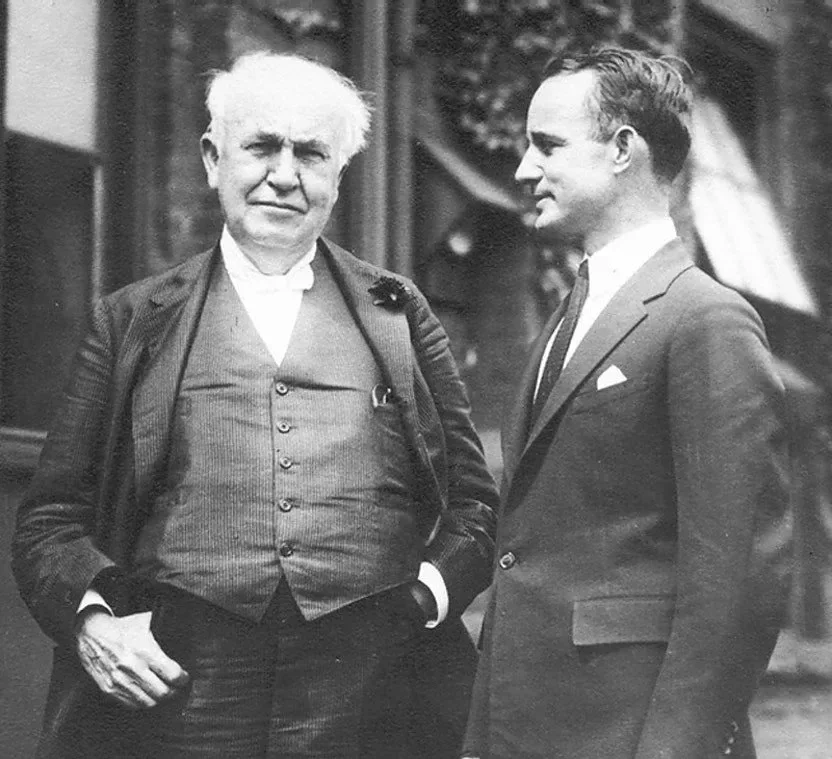
Napoleon Hill alongside inventor Thomas Edison
Self
Wellbeing
Mind - Hill's entire philosophy centered on what he called "autosuggestion" — the deliberate, repeated conditioning of one's own thoughts toward a specific goal — which he described as the foundation of everything else in Think and Grow Rich.
Body - No public information.
Soul - Hill described his belief in a "Definite Major Purpose" as central to his own life, framing personal conviction itself as a spiritual discipline as much as a practical one.
Admin
Time - No public information on any specific daily routine.
Paperwork - Hill's business record includes real financial and legal trouble — biographers document multiple failed ventures, and some accounts describe him spending stretches of his life evading creditors.
Money - Despite writing extensively about wealth, Hill was frequently in financial difficulty for much of his life, only achieving lasting financial success later, largely through Think and Grow Rich's eventual commercial success.
Social
Friends - Hill claimed close advisory relationships with major public figures of his time, including Presidents Wilson and Roosevelt, though historians have found no official record supporting these claims.
Communities - His philosophy went on to directly influence the modern self-help and personal development industry, cited by later figures across business and motivational speaking as foundational.
One-on-One - The most documented one-on-one relationship in his life may be with his son Blair — a relationship Hill publicly held up as proof of his own philosophy, while biographers describe a more complicated and, at times, difficult private reality behind that public story.
Key Takeaways
Further Reading
Napolen Hill List Of Frameworks
Napoleon Hill — Internet Archive
Napoleon Hill — Goodreads
Napoleon Hill — Open Library