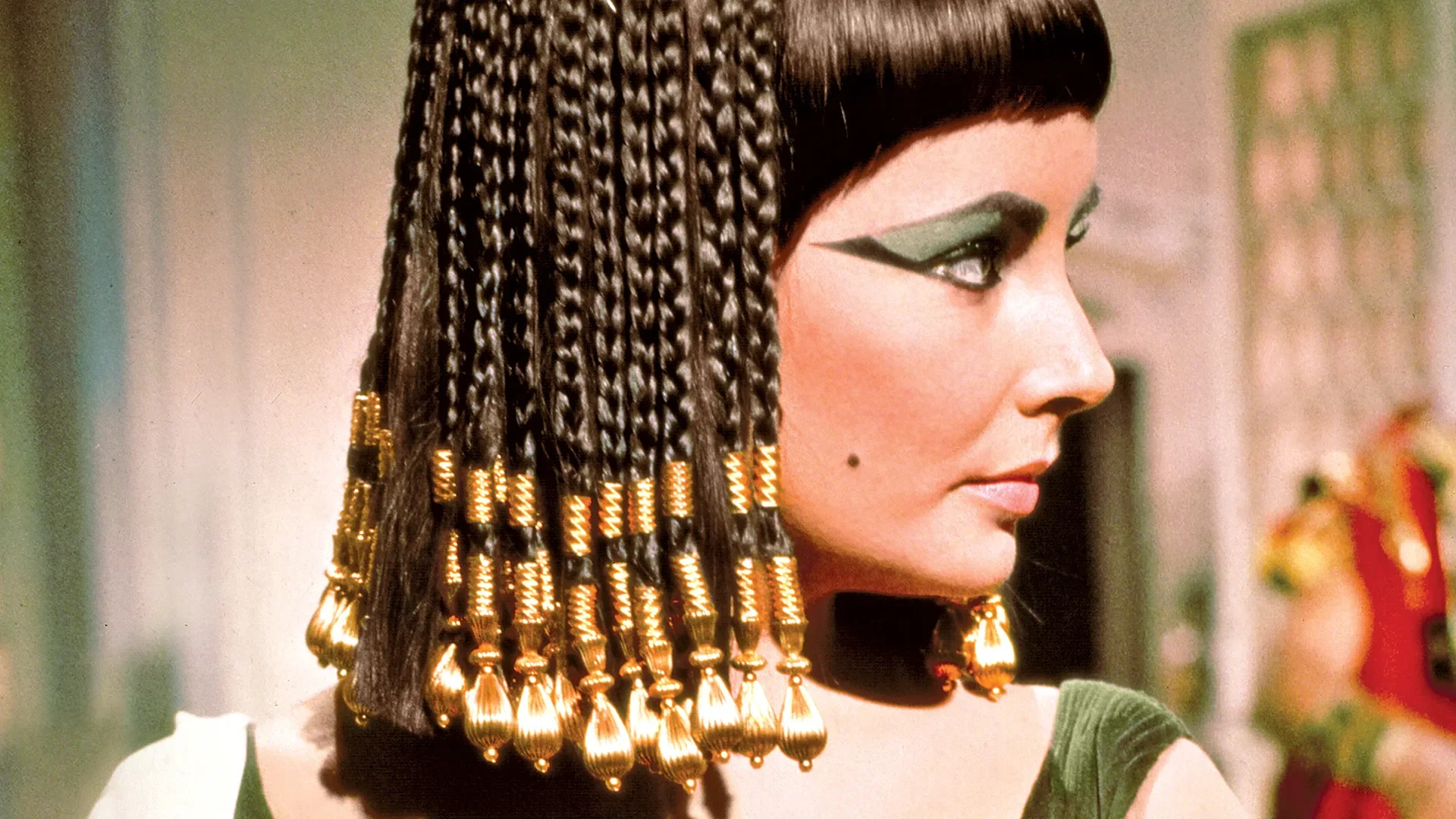
Cleopatra VII died in 30 BCE, shortly after she and her ally Mark Antony were defeated by Augustus. Cleopatra died by suicide to avoid being captured and displayed in a Roman triumph by Octavian after Egypt fell to Rome.
Cleopatra VII Thea Philopator was the last active ruler of the Ptolemaic Kingdom of Egypt, The Ptolemies were a Greek-Macedonian royal dynasty that ruled Egypt after the death of Alexander the Great. The dynasty was founded by Ptolemy I Soter, one of Alexander's generals. They ruled Egypt for about 300 years, from 305 BCE to 30 BCE. Although the Ptolemies were Greek in origin, they adopted many Egyptian customs and traditions and ruled as Egyptian pharaohs.
In this post, we're going over Cleopatra's List to see how her life fits into the Home, Work, and Self framework.
Sources
Cleopatra: A Life by Stacy Schiff (biography, drawing on ancient sources including Plutarch)
Home
House
Real Estate - Her residence was part of a huge royal district in Alexandria—the Ptolemaic palace complex, or Basileia—which stretched along the waterfront and included multiple buildings, gardens, ceremonial spaces, harbors, and religious structures.
Design - The Alexandria court was one of the most luxurious in the world at the time. The royal complex was intimately connected to the harbor. Terraces, quays, monumental buildings, and waterfront spaces looking out over a harbor full of ships.
Maintain - The Ptolemaic court had officials and servants with roles analogous to butlers, grooms, pages, guards, and other household personnel. So cleaning, food preparation, animal care, security, entertaining guests, and general upkeep would have been handled by a substantial staff rather than by Cleopatra personally.
Partner
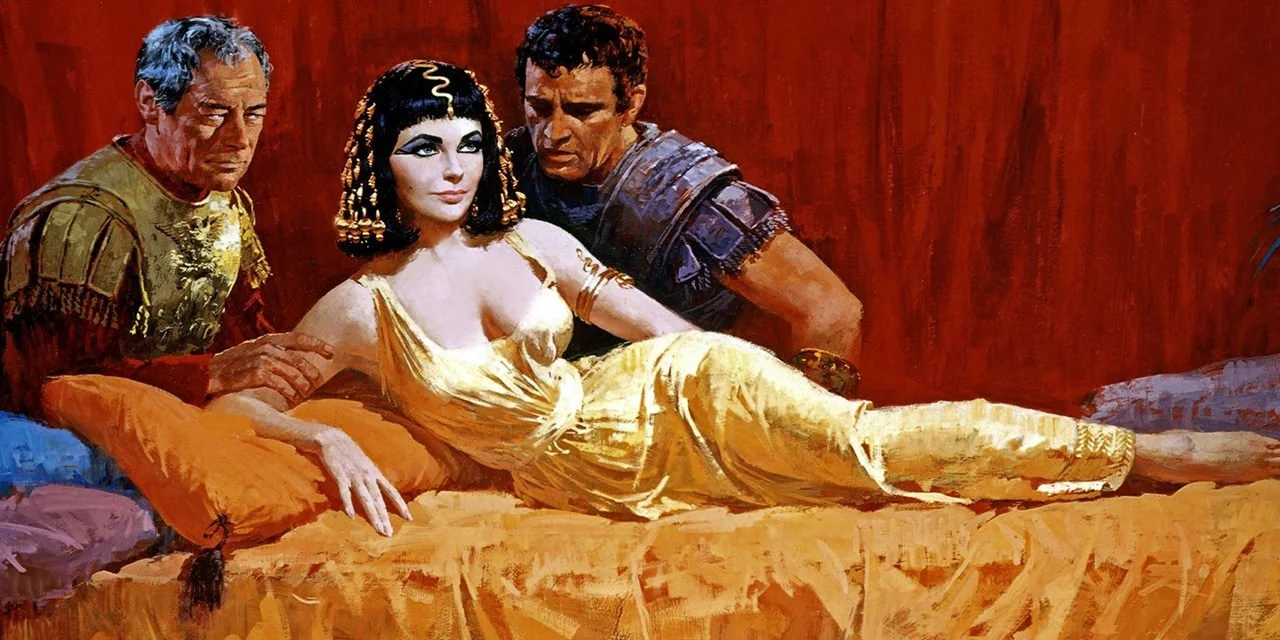
Quality Time - Cleopatra's two major recorded relationships were with Julius Caesar, and later Mark Antony. they formed a society or group called the "Inimitable Livers" a private circle devoted to extravagant banquets and entertainment. Cleopatra would accompany Antony in disguise while he wandered through Alexandria at night, getting into mischief and with ordinary people.
Shared Responsibilities - With Antony, the relationship was as much political as personal — Cleopatra funded and supplied his military campaigns in the east, and in return recovered Ptolemaic territory in the Levant and Red Sea region for Egypt.
Conversation - When Cleopatra first met Julius Caesar in Alexandria in 48 BCE, she was secretly brought to him rolled inside a carpet. The surviving accounts suggest that she argued her political case before him. Her position was extremely dangerous: she was in conflict with her brother Ptolemy XIII and needed Caesar's support to regain the throne. Ancient sources portray Cleopatra and Mark Antony as spending a great deal of time together in conversation, banquets, games, and intellectual entertainment.
Family
Parents - Father: Ptolemy XII Auletes — King of Egypt from the Ptolemaic dynasty. He was known as "Auletes," meaning "the Flute Player." Mother: Cleopatra V Tryphaena, but this is debated.
Siblings - Cleopatra VII had five siblings that we know of:
Berenice IV — older sister; Cleopatra later had her executed.
Cleopatra VI Tryphaena — her identity and exact relationship are debated.
Arsinoe IV — younger sister; Cleopatra's political rival, eventually killed on Cleopatra's orders.
Ptolemy XIII — younger brother and co-ruler; Cleopatra fought a civil war against him.
Ptolemy XIV — younger brother and co-ruler after Ptolemy XIII's death.
Kids - Cleopatra had four children: one son with Julius Caesar and three with Mark Antony.
👑 Caesarion — Her son with Julius Caesar and her co-ruler, He was killed in 30 BCE, at 17 years old, after her defeat.
☀️ Alexander Helios — Her son with Mark Antony and twin brother of Cleopatra Selene. His name means "Sun" in Greek.
🌙 Cleopatra Selene II — Alexander's twin sister, named after the Greek goddess of the Moon. After Cleopatra's death, Selene was taken to Rome and raised by Octavia, Antony's former wife. She later married Juba II, king of Mauretania, and became queen of a prosperous North African kingdom.
👶 Ptolemy Philadelphus — Cleopatra and Antony's youngest child. He was taken to Rome after their defeat but later disappears from the historical record.
Work
Make
Time - Cleopatra became queen at 18 and ruled for 21 years, a notably long reign in an era where Ptolemaic rulers were routinely deposed or killed by rivals — including within her own family.
Space - Her seat of power was Alexandria's palace and its attached Mouseion and Library, then the intellectual center of the Hellenistic world.
Supplies - She personally oversaw monetary policy, including a reform of Egypt's bronze coinage that shifted its value from being based on weight to being fixed by decree — a document historians believe she may have personally written or commissioned treatises on.
Show
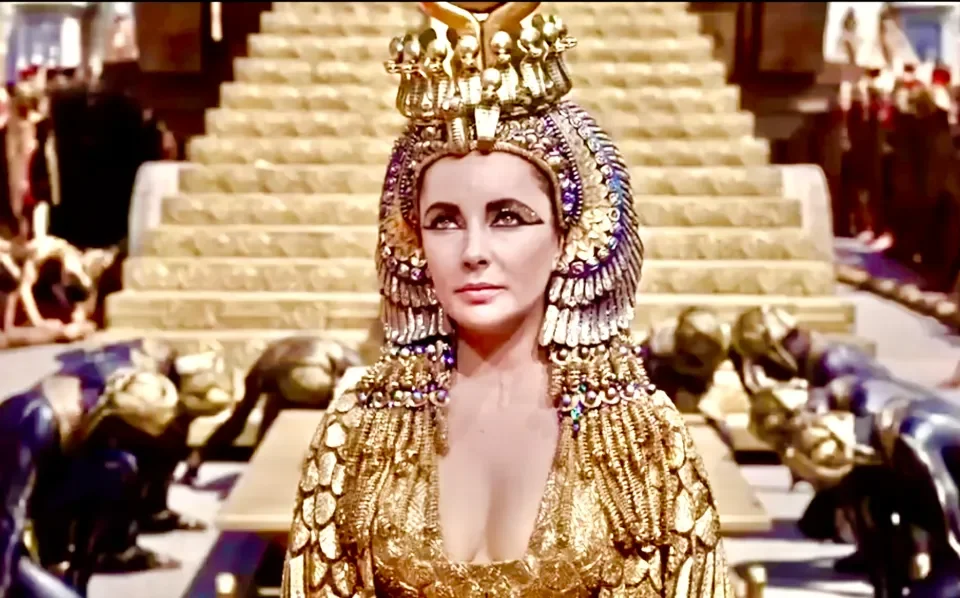
In Real Life - Her most famous "in real life" appearance is her elaborate barge entrance to meet Mark Antony at Tarsus, staged deliberately to present herself as the goddess Isis to a Roman audience.
Print - Her coinage doubled as public messaging, stamped with Greek inscriptions declaring her queen while incorporating Egyptian sacred symbols — a deliberate visual blending of both identities she ruled over.
Online - Not applicable to her era.
Sell
Services - Egypt under Cleopatra controlled critical Mediterranean trade routes and grain supplies, giving her real leverage in negotiations with Rome.
Products - Her monetary reforms effectively created a more stable, trusted currency, aligning Egyptian bronze coinage closer in value to the Roman denarius.
Events - The Donations of Alexandria in 34 BCE was a major staged political event, where Antony publicly declared Cleopatra's children rulers over Roman-controlled eastern territories — a direct provocation toward Octavian in Rome.
Self
Wellbeing
Mind - Cleopatra was educated at Alexandria's Mouseion in philosophy, rhetoric, mathematics, astronomy, and medicine, and ancient sources credit her with fluency in seven to nine languages — reportedly the only Ptolemaic ruler in nearly three centuries to learn Egyptian itself.
Body - No public information — no reliable ancient source gives a physical description of Cleopatra; the "great beauty" narrative was largely a later embellishment, and even Plutarch emphasized her voice and presence over her looks.
Soul - No public information
Admin
Time - Ptolemaic Egypt had an extensive bureaucracy managing taxation, agriculture, supplies, transportation, and payments. The palace economy was embedded in that system. Officials kept financial records and accounts, and state employees could be paid partly in goods such as grain, oil, clothing, and wine.
Paperwork - A surviving Greek papyrus, believed to bear Cleopatra's own handwritten annotation approving a tax exemption, is one of the only direct physical traces of her administrative work that still exists today.
Money - Cleopatra was considered a monetary reformer, she strengthened Egypt's financial system. She issued coins with her portrait, managed the currency, supported trade, and worked to increase government revenue and stabilize the economy.
Social
Friends - Cleopatra was a patron of scholars and intellectuals, surrounding herself with educated and influential people. Charmion and Iras appear to have been among her closest personal companions. Apollodorus of Sicily was a trusted ally who helped her reach Julius Caesar. and Ganymedes who was a military figure involved in her political struggles.
Communities - She cultivated alliances beyond Rome as well, including a diplomatic relationship with Herod of Judea, using patronage and marriage politics to extend her influence regionally.
One-on-One - Nearly everything we know about her one-on-one relationships comes through the lens of Caesar and Antony, both politically loaded relationships rather than documented personal friendships.
Key Takeaways
Cleopatra was a working administrator and monetary reformer, not just the romantic figure Roman writers reduced her to — her policy record actually survives, if you look for it.
Nearly every source we have about her personal life comes from her political enemies, writing after her death — treat the "seductress" narrative with real skepticism.
Her relationships with Caesar and Antony were inseparable from state policy; there's no clean way to separate "Partner" from "Work" in her case, which is itself revealing about the constraints she operated under.
She was the only Ptolemaic ruler in nearly 300 years of Greek rule over Egypt to actually learn the Egyptian language — a small fact that says a lot about how she approached governing.
Links & Resources
Cleopatra — Encyclopædia BritannicaCleopatra VII: Scholar,
Patron, Queen — American Research Center in Egypt
Cleopatra VII — World History Encyclopedia
Cleopatra & Antony — World History Encyclopedia
Was Cleopatra Beautiful? — World History Encyclopedia
Cleopatra — Encyclopaedia of Ancient History
Cleopatra — The Metropolitan Museum of Art
Ancient Egypt — The British Museum
Ancient Egyptian Art — The Getty Museum
Egyptian Antiquities — The Louvre Museum
Cleopatra: A Life — Stacy Schiff
Antony and Cleopatra — William Shakespeare
The Oxford History of Ancient Egypt — Ian Shaw
Cleopatra and Rome — Diana E. E. Kleiner