
Mary Poppins is the magical, impeccably proper English nanny created by author P.L. Travers, first appearing in her 1934 novel and later brought to the screen in Disney's 1964 film. She arrives at 17 Cherry Tree Lane via an east wind to care for the Banks children, and departs the same way once her work is done — carrying nothing but a carpetbag that holds far more than it should. In this post, we're going over Mary Poppins's List to see how her life fits into the Home, Work, and Self framework.
"Just a spoonful of sugar helps the medicine go down." — Mary Poppins
Sources
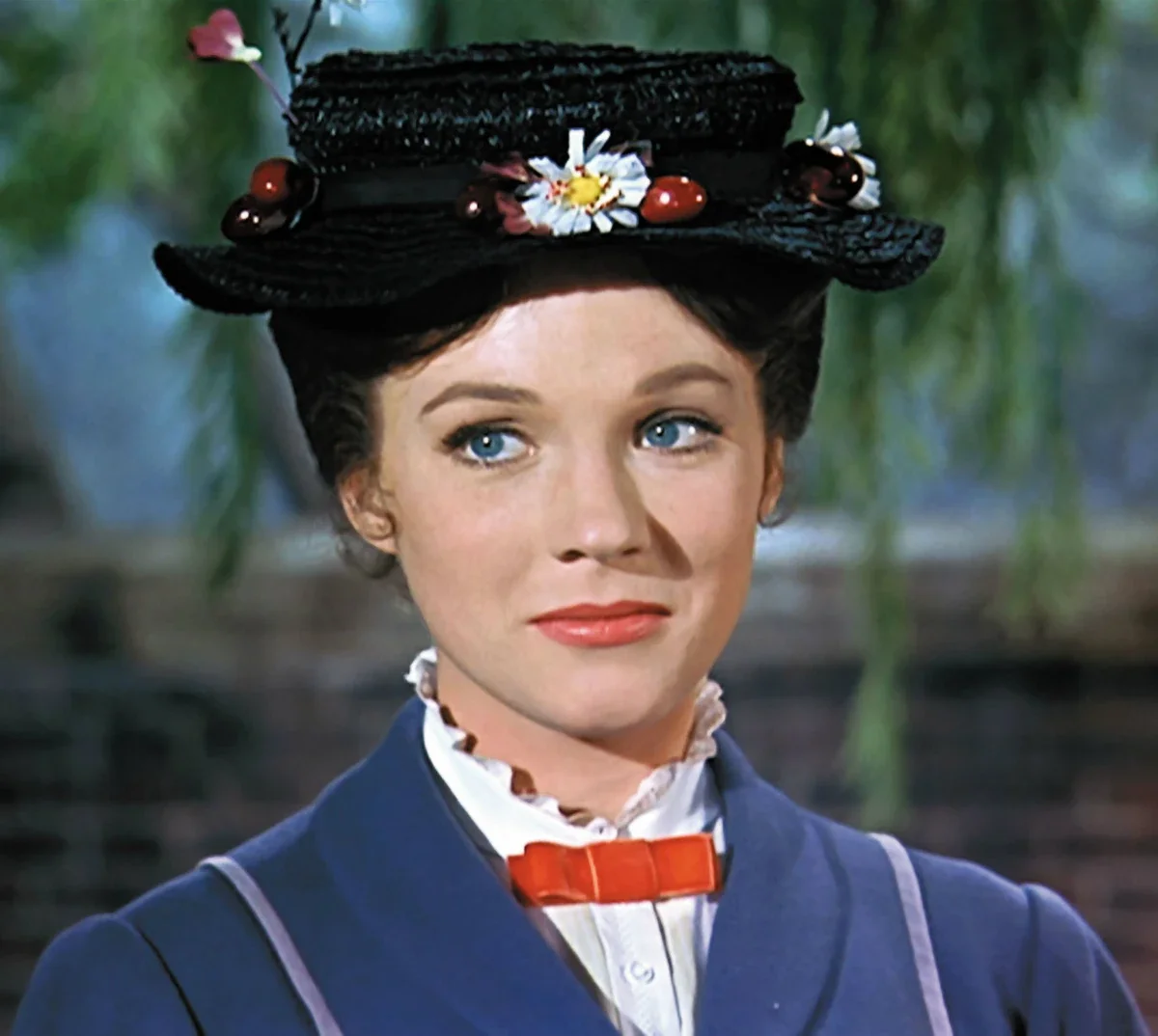
Home
House
Real Estate - Mary Poppins doesn't own property of her own; she lives wherever her work takes her, most notably 17 Cherry Tree Lane, the Banks family home in London.
Design - She has a clear, exacting standard for how a space should look, shown directly when she first arrives and inspects the nursery, setting the scene for exactly how she expects it to be kept from then on.
Maintain - When the room falls short of that standard, she restores it instantly — a snap of her fingers sends toys flying back into place and reorganizes the whole nursery in seconds, tidiness and magic applied together rather than one substituting for the other. She also travels remarkably light for someone so particular, carrying her entire household in a single carpetbag that holds a mirror, a hat stand, a plant, and considerably more than its size should allow.
Partner
Quality Time - Her closest ongoing companion is Bert, the cheerful chimney sweep and jack-of-all-trades, with whom she shares several adventures, including a memorable afternoon inside one of his chalk pavement drawings.
Shared Responsibilities - Rather than splitting domestic duties as a couple would, the two share responsibility for the children directly — Bert joins her on outings with Jane and Michael, helping mind and entertain them during the rooftop chimney sweep escapade.
Conversation - Their exchanges carry a clear warmth and familiarity — teasing banter, private jokes, and an easy comfort with each other that reads as real intimacy, even though neither ever states the relationship outright. Bert plays along with her airs, she lets her guard down slightly around him in ways she doesn't with anyone else, and their duet during the chimney sweep rooftop scene is as close as the story comes to romance.
Family
Parents - No public information.
Siblings - No public information.
Kids - She has none of her own; her defining relationship is with the Banks children, Jane and Michael (and, in the books, younger twins John and Barbara), whom she cares for with a mix of brisk discipline and genuine magic.

Work
Make
Time - She arrives precisely when she's needed and leaves the moment she's not — her own rule, stated plainly, is that she'll stay only "until the wind changes."
Space - Her workspace is the nursery and the wider adventures she creates just outside it — magical outings that bend the ordinary rules of the house.
Supplies - Her carpetbag is essentially her entire toolkit, producing exactly what's needed for any situation, however implausible.
Show
In Real Life - Her most memorable "in real life" moments are the adventures she stages directly with the children — the ceiling tea party with Uncle Albert, and a countryside outing that turns an ordinary afternoon into something extraordinary.
Print - She originated in print, across eight books P.L. Travers wrote about her between 1934 and 1988.
Online - Not applicable to her as a character; her modern digital footprint is entirely a byproduct of the 1964 film's ongoing popularity and its 2018 sequel, Mary Poppins Returns.
Sell
Services - Her real service goes beyond childcare — she ultimately delivers the reconciliation of George Banks with his children, the true measure of what she was actually hired to fix.
Products - She doesn't sell anything within the story.
Events - The animated horse race during the "Jolly Holiday" countryside outing is the story's clearest staged event — a full spectacle built around a single afternoon adventure.
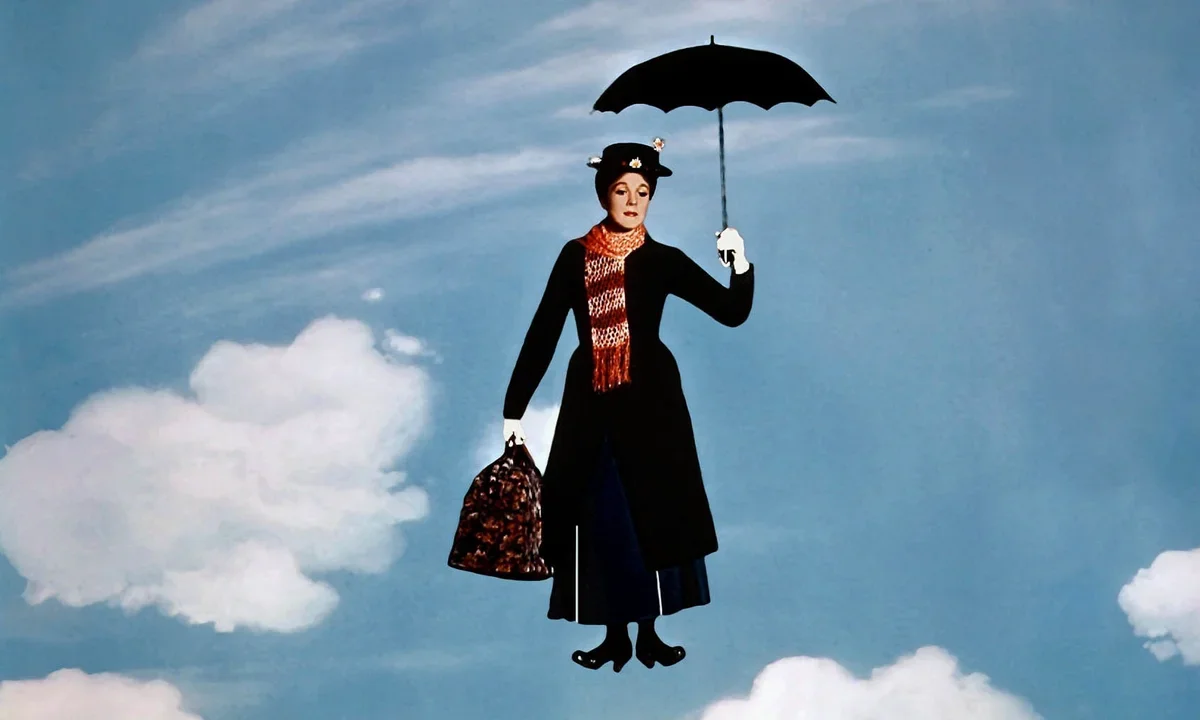
Self
Wellbeing
Mind - She's characterized by unshakeable composure — nothing surprises her, however magical or chaotic, and she never breaks her own sense of propriety.
Body - She takes visible, repeated pleasure in her own appearance, frequently admiring herself in mirrors and shop windows, a small but consistent character trait across the books.
Soul - Her guiding philosophy, stated directly in her signature song, is that even necessary unpleasantness goes down easier with the right attitude — "a spoonful of sugar helps the medicine go down."
Admin
Time - She operates on her own schedule entirely, arriving and departing on her own terms rather than a family's, tied to the wind rather than a calendar.
Paperwork - No public information.
Money - No public information.
Social
Friends - Bert is her most consistent companion across the story, along with a wide cast of magical acquaintances she seems to know already — Uncle Albert, the Bird Woman, and various figures who treat her arrival as expected rather than surprising.
Communities - She moves through a version of London where the ordinary and the magical coexist without much explanation, suggesting she belongs to some wider unseen world the story never fully reveals.
One-on-One - Her real impact in the story happens through individual relationships — particularly with George Banks, whose reconciliation with his children by the story's end is the true measure of her work, even though her official job was only ever to mind Jane and Michael.

Key Takeaways
Mary Poppins defines her own terms of engagement — she arrives and leaves on her own schedule, not the family's.
Her actual impact targets the father, George Banks, even though her formal responsibility is the children — a case of solving the real problem rather than just the stated one.
She carries almost no possessions, yet is never without exactly what's needed — economy of means paired with total capability.
Her privacy is total — even her closest companion, Bert, openly admits he doesn't know what's really going on with her.
Composure and self-possession are her defining traits; nothing in the story ever cracks her sense of propriety.
Links & Resources
Source Material